YUJIANG INFO
Silica (White Carbon Black)
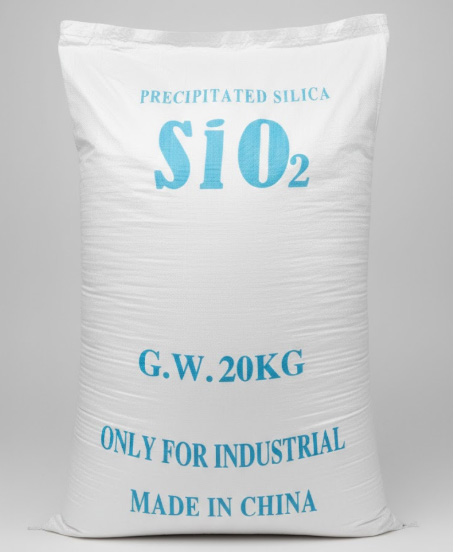
Silica, is a synthetically produced, amorphous form of silicon dioxide (chemical formula: SiO?·nH?O). It is neither carbon nor black in color, but a white, non-toxic, odorless, amorphous fine powder.
The name “white carbon black” comes from its strong reinforcing performance. In certain applications—especially in the rubber industry—it can partially or fully replace traditional carbon black, while being white in color, hence the name.
Key Properties
1. High specific surface area:
The particles are internally porous with a very large surface area, forming the basis for excellent adsorption, reinforcement, and dispersion properties.
2. High dispersibility:
After surface treatment, it can be uniformly dispersed in many systems.
3. Chemical stability:
Resistant to high temperatures, non-combustible, acid-resistant (except hydrofluoric acid), and provides good electrical insulation.
4. Thickening and thixotropy:
Forms a three-dimensional network structure in liquid systems, offering good thickening and thixotropic behavior (thick at rest, thinner under shear).
5. Reinforcement effect:
Significantly improves the mechanical properties of rubber and elastomers, such as tensile strength, tear strength, and abrasion resistance.
Main Production Methods
1. Fumed (Pyrogenic) Process:
· Produced by high-temperature hydrolysis of silicon tetrachloride in a hydrogen-oxygen flame.
· Extremely high purity (SiO? > 99.8%), very small particle size (nano-scale), and outstanding reinforcing performance; known as fumed silica.
· High cost; mainly used in high-end applications such as silicone rubber, coatings, and adhesives.
2. Precipitation Process:
· Quartz sand and soda ash are used to produce sodium silicate (water glass), which then reacts with acid (usually sulfuric acid). The precipitate is washed, dried, and milled.
· Specific surface area and reinforcement are slightly lower than fumed silica, but the cost is much lower.
· Accounts for the majority of total precipitated silica production and is widely used in rubber, plastics, toothpaste, feed, and other fields.
Main Application Areas
1. Rubber Industry (largest application):
· Green tires: The most significant breakthrough application. When added to tire tread compounds, precipitated silica significantly reduces rolling resistance and fuel consumption, while improving wet grip and abrasion resistance. Performance is further enhanced when used with silane coupling agents.
· Shoe soles: Improves wear resistance, slip resistance, and flexibility.
· Other rubber products: Such as hoses, seals, and conveyor belts, where it is used as a reinforcing filler.
2. Silicone Rubber:
· Fumed silica is an irreplaceable reinforcing material for silicone rubber, capable of increasing its strength by dozens of times.
3. Daily Chemical Products:
· Toothpaste: Acts as a primary abrasive and thickener, gently removing plaque without damaging tooth enamel.
· Cosmetics: Used as an adsorbent, thickener, and sunscreen agent (e.g., as a carrier for nano-TiO? or ZnO).
4. Food and Feed Industry:
· Used as an anti-caking agent to prevent powdered foods (such as milk powder, coffee creamer, and seasonings) and feeds from moisture absorption and clumping.
5. Coatings, Inks, and Adhesives:
· Functions as a thixotropic agent and anti-settling agent, preventing pigment sedimentation during storage and sagging during application.
6. Other Fields:
· Agrochemicals: Used as a carrier to improve flowability.
· Papermaking: Used as a filler and matting agent.
· Pharmaceuticals: Used as a drug carrier and disintegrant.
· Environmental protection: Used as an adsorbent in wastewater treatment.
Development Trends
· Green development:
With increasing global emphasis on energy conservation and environmental protection, the growing adoption of green tires will continue to drive market growth for precipitated silica, especially highly dispersible grades.
· Functionalization:
Through surface modification and other technologies, specialized silica products (e.g., hydrophobic, high-adsorption, high-transparency types) are being developed to expand applications in high-tech fields.
· Nano-scale development:
Nano-scale fumed silica is seeing deeper application in advanced areas such as composite materials, electronics, information technology, and biomedicine.
In summary, precipitated silica is a high-performance, multifunctional silicate material with a wide range of applications. From everyday products like toothpaste and tires to high-end silicone rubber and advanced composites, it plays an indispensable role and is often regarded as an essential “industrial monosodium glutamate” in modern industry and daily life.